Skip to content
  • Shop

    Shop Animal Trace Minerals®

    Choose the size that fits your barn.

    One product. Four convenient sizes.

    Shop all sizes · easy reorder  →
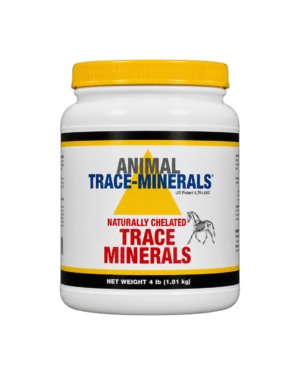
    Animal Trace Minerals 4 lb Jar
    4 lb Jar $40.96
    Add to Cart

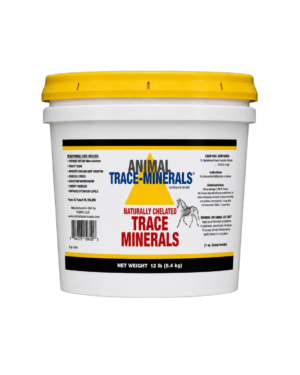
    Animal Trace Minerals 12 lb Pail
    12 lb Pail $103.74
    Add to Cart

    Animal Trace Minerals 22.5 lb Pail
    22.5 lb Pail $168.34
    Add to Cart

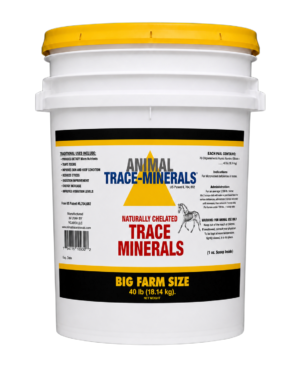
    Animal Trace Minerals 40 lb Pail
    40 lb Pail $255.15
    Add to Cart

    Shared label directions

    Daily use for one horse

    2×

    Average 1,100 lb horse

    2 scoops — 2 oz daily

    1×

    Horse under 700 lb

    1 scoop — 1 oz daily

    1 scoop = 1 oz

    Use the current product label.

    Container size Price Price / lb 1,100 lb horse
    2 oz / day
    Under 700 lb
    1 oz / day
    Quick add
    4 lb Jar $40.96 $10.24 Approx. 32 days Approx. 64 days Add to Cart
    12 lb Pail $103.74 $8.65 Approx. 96 days Approx. 192 days Add to Cart
    22.5 lb Pail $168.34 $7.48 Approx. 180 days Approx. 360 days Add to Cart
    40 lb Pail $255.15 $6.38 Approx. 320 days Approx. 640 days Add to Cart

    Duration estimates assume 16 ounces per pound and consistent daily use. Always follow the current product label.

  • Learn

    Learn

    Montmorillonite Fulvic acid Mineral profile

    Montmorillonite

    The Natural Mineral Matrix

    Montmorillonite is a naturally occurring layered clay mineral. Two silica-rich sheets surround an alumina-rich sheet, with water and exchangeable mineral ions between neighboring layers.

    Its layered structure and electrical charge give it the ability to exchange certain ions with its surroundings. Animal Trace Minerals describes this naturally occurring material as the mineral matrix of its product.

    • Layered
      structure
    • Surface
      charge
    • Active
      surfaces
    • Exchangeable
      ions

    Layered clay structure

    Supplied molecular illustration of montmorillonite layers with water and exchangeable ions between the layers
    • Tetrahedral sheets
    • Octahedral sheet
    • Interlayer space
    In the 2:1 clay layer, two tetrahedral sheets surround one octahedral sheet. Interlayer spaces lie between successive layers.

    Fulvic Acid

    Naturally Associated Compounds

    Fulvic acids belong to a diverse family of naturally occurring organic compounds formed as plant and microbial material breaks down.

    They can associate with mineral ions to form complexes, making them part of the chemistry of natural mineral and organic materials. Historical Animal Trace Minerals information describes humic and fulvic compounds associated with this mineral source.

    • Organic functional groups Organic groups provide sites where mineral interactions can occur.
    • Mineral associations Binding depends on the mineral, the organic material, and surrounding conditions.
    • Part of the natural matrix The organic material is discussed alongside the clay and its naturally occurring elements.

    Fulvic substances · conceptual organic network

    OH COOH HO HOOC COOH OH OH COOH OH
    Illustrative organic groups—not a single molecular formula or a product-specific laboratory structure.

    Naturally occurring organic compounds and minerals are part of the same source material.

    Broad Trace
    Mineral Profile

    A 76-element natural mineral profile

    The Montmorillonite Technical Report and Dr. Carlos Cortelezzi’s original equine study describe a natural mineral profile containing 76 elements. Selected elements from that profile are shown below.

    • Ca Calcium
    • Mg Magnesium
    • Zn Zinc
    • Cu Copper
    • Mn Manganese
    • K Potassium

    Natural mineral composition can vary. Follow the current product label for declared composition and feeding directions.

    Naturally occurring mineral matrix

    Ca Mg Zn Cu Mn K 76
    Selected elements shown for orientation; the network is illustrative rather than a quantitative analysis.
    Mineral science references

    These references explain the clay structure and organic chemistry illustrated above.

    Clay structure: USGS · Smectite group . Exchange chemistry: USGS · Ion exchange .

    Organic substances: International Humic Substances Society .

    Patent & Supporting Research

    Our documentation includes U.S. Patent No. 6,764,692 B1, issued to Carlos Cortelezzi in 2004, the Montmorillonite Technical Report, and his 1997 equine field study. The patent describes the mineral composition, preparation method, and equine applications. The field study records qualitative observations involving hoof condition, mobility, and feeding.

    Read the original documents for their methods, findings, and context. Reported observations are not a guarantee of individual results; current product labeling and veterinary guidance remain important.

    U.S. Patent 6,764,692 (PDF) Montmorillonite Technical Report (PDF) Original Laminitis Study · 1997 (PDF)
  • Account

    Your Account

    Open Full Account

    Loading your account…

  • Contact

    Contact Us

    Loading contact information…

$0.00 0 Cart
Home>Equine>22.5 lb Pail
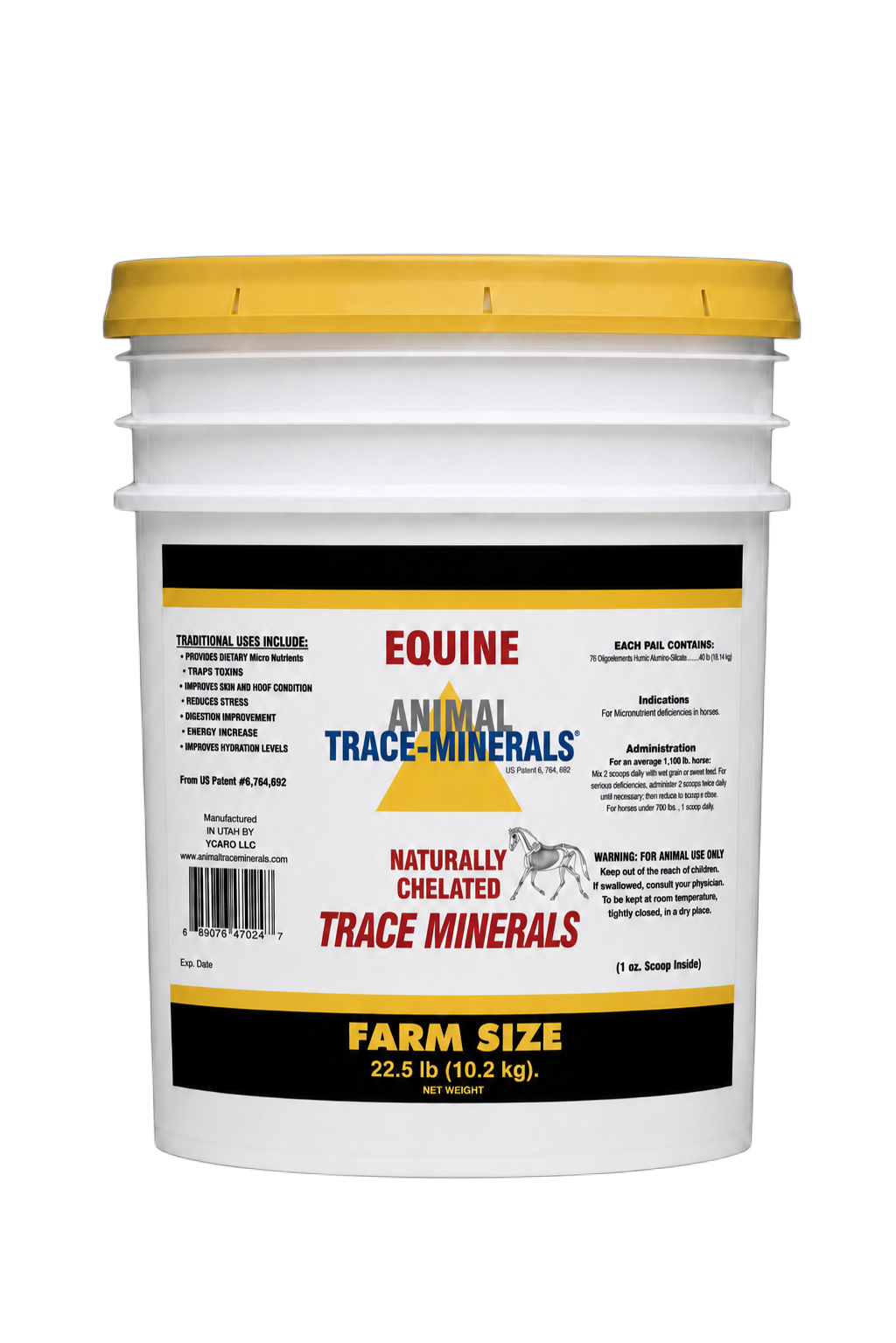
22.5 lb Pail

22.5 lb Pail

$168.34

Non- Toxic Naturally Chelated Trace Minerals

2 ounces per day = 180 daily doses

Category: Equine
  • Additional information

Additional information

Weight 24 lbs
Dimensions 12 × 12 × 15 in

Related products

  • 12 lb Pail

    12 lb Pail

    $103.74
    Add to cart
  • 40 lb Pail

    40 lb Pail

    $255.15
    Add to cart
  • 4 lb Jar

    4 lb Jar

    $40.96
    Add to cart
  • Backed by Nature Naturally chelated trace minerals.
  • Made in the USA Proudly refined from mine to market in the USA.
  • Quality You Can Trust Carefully sourced with consistency in mind.
  • Policies & Support
    • Privacy Policy
    • Terms & Conditions
    • Shipping & Returns

© 2018–2026 AnimalTraceMinerals.com® · All Rights Reserved

We use cookies

We use cookies to improve your experience on this website. You may choose which types of cookies to allow and change your preferences at any time. Disabling cookies may impact your experience on this website. You can learn more by viewing our Cookie Policy.

Cookie Consent by